There is only 1 God in 3 persons!
Christianity
The Father, The Son and The Holy Spirt.
John 14:6-7
Jesus said to him, “I am the way, and
the truth, and the life. No one comes to the Father
except through me. If you had known me, you would have known my Father also. From now on you do know him
and have seen him.”
Jesus Christ isn't a way, a truth, a life.
Jesus Christ is THE WAY, THE TRUTH, THE LIFE!
Salvation from sin and the gift of eternal life with God is through Christ alone.
Every other 'way' is of the Devil.
No Other Gospel - Galatians 1:6–9
[6] I am astonished that you are so quickly deserting him who called you in the grace of Christ and are
turning to a different gospel— [7] not that there is another one, but there are some who trouble you and
want to distort the gospel of Christ. [8] But even if we or an angel from heaven should
preach to you a gospel contrary to the one we preached to you, let him be accursed. [9] As we
have said before, so now I say again: If anyone is preaching to you a gospel contrary to the one you
received, let him be accursed.
(ESV)
Names for the Devil in the Bible
| Name | Description |
|---|---|
| Satan | The main adversary of God and humanity. |
| Lucifer | Described in Isaiah 14:12 as the "light-bringer." |
| Beelzebub | Mentioned in Matthew 12:24 as the "Lord of the Flies." |
| The Evil One | Refers to the devil in various contexts, particularly in 1 John 5:19. |
| Prince of Darkness | Associated with evil and opposition to God. |
| Prince of the Power of the Air | Mentioned in Ephesians 2:2, indicating influence over earthly realms. |
| Tempter | Refers to the role of tempting Jesus in the wilderness (Matthew 4:3). |
| Accuser | Seen in Revelation 12:10 as the one who accuses believers. |
| Old Serpent | Refers to the serpent in Genesis 3, also mentioned in Revelation 12:9. |
| Abaddon (or Apollyon) | Refers to the angel of the bottomless pit in Revelation 9:11. |
Catholicism exposed
The 'Catholic'
church
The word "Catholic" (from Greek katholikos = "according to the whole" or "universal") originally meant
exactly what you say: the universal, global church of Jesus Christ, not an institution headquartered in
Rome.
Originally, and in the creeds, "catholic" simply means the global, universal church of Christ wherever it
is found.
Only after 1054, and especially after the Reformation, did “Catholic” become the trademark of the Western
church in communion with the Pope — what we today call the Roman Catholic Church.So when a Protestant or
Orthodox Christian says “I believe in the holy catholic church,” they are not confessing allegiance to the
Vatican; they are confessing the original meaning: the worldwide Body of Christ that transcends any single
denomination or city (Rome included).
Pope
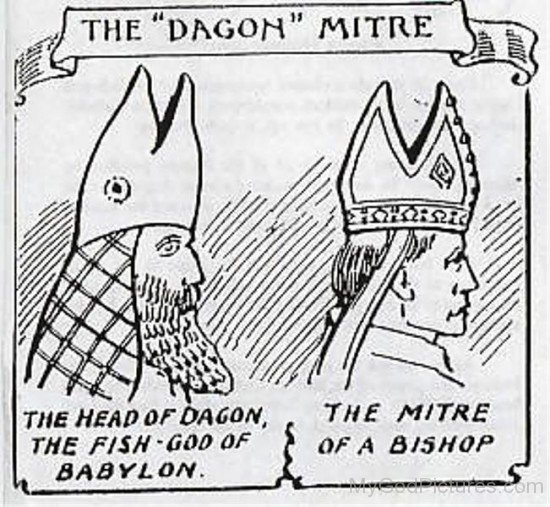
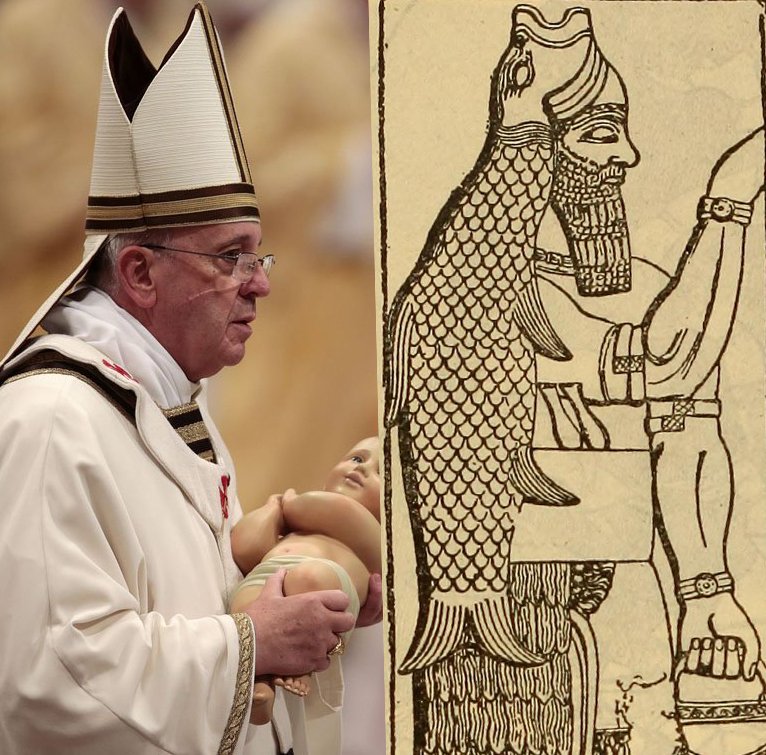
- The Popes are not of God, do not represent Christ, and the mitre that they wear "is the very mitre worn by the priests of Dagon, the fish-god of the Philistines and Babylonians.", according to the 19th century, anti-Catholic Protestant minister Alexander Hislop.
- Popes act like they are god on Earth, which they are not.
- More important than that, the Popes are unable to save anyone from anything.
- Furthermore, God does not change his mind. The Popes change their minds from Pope to Pope and time to time.
- Popes take advantage of their followers' ignorance of the results of the first sin, that actually point not to Mary as the Co-Redemptrix, but to Mary's seed, Jesus Christ, as the redeemer, when God said "he shall bruise your head, and you shall bruise his heel." that Catholics changed to "she shall crush thy head, and thou shalt lie in wait for her heel" to elevate Mary to a position of worship.
Mary worship
Mary worship is anti-christ.
The first Catholic bibles modified Genesis 3:15 to twist God's words to the serpent (Satan) to mislead
readers by elevating Mary to the position of 'Co-Redemptrix' and this lie diminishes Christ as the sole
reedemer doing all of the redemptive salvific work himself by shedding his blood on the cross.
Catholic bibles
The Catholic bible starting with the Vulgate, considered normative for doctrine, though not considered
inerrant in every detail, allows for it to be changed as purposeful and accidental errors are found, such
as the misinterpreted Genesis 3:15. A worldly man would say this misinterpretation was an accident. A
Godly man would say this mistranslation was purposely inspired by Satan and is the twisting of God's
response to the original sin, the original sin in which Adam and Eve fell for the twisting of God's first
command by the serpent regarding eating of the fruit of the tree of knowledge of good and evil, be the
original sin of the Roman Catholic church. Imagine Satan changing God's words of condemnation to him, so
that it means something just a little bit wrong.
This simple change elevates Mary, who otherwise would just be thought of as Christ's mother, Holy, set
apart for that purpose only, not to be deified or worshiped in any way, shape, or form.
- Genesis 3:15 in Latin from the Vulgate is:
“Inimicitias ponam inter te et mulierem, et semen tuum et semen illius: ipsa conteret caput tuum, et tu insidiaberis calcaneo ejus.”
This translates to:
“I will put enmities between you and the woman, and your offspring and her offspring: she shall crush your head, and you shall lie in wait for her heel.”
There is no 'She' doing anything or her heel getting bruised. That little tweak helps minimize Christ and sets the stage for Mary worship.
These are the most widely used Catholic Bibles and Genesis 3:15 from each bible:
The first two are supposedly the most popular.
Only two of the six most popular Catholic Bibles correctly state Genesis 3:15
| Catholic Bible Version | Year Created | Genesis 3:15 Text |
|---|---|---|
| New American Bible (NAB) | 1970 | I will put enmity between you and the woman, and between your offspring and hers; they will strike at your head, while you strike at their heel. |
| New American Bible, Revised Edition (NABRE) | 2011 | I will put enmity between you and the woman, and between your offspring and hers; they will strike at your head, while you strike at their heel. |
| Revised Standard Version, Catholic Edition (RSV-CE) | 1966 | I will put enmity between you and the woman, and between your seed and her seed; he shall bruise your head, and you shall bruise his heel. |
| Douay-Rheims Bible | 1609 | I will put enmities between thee and the woman, and thy seed and her seed: she shall crush thy head, and thou shalt lie in wait for her heel. |
| Jerusalem Bible (JB) | 1966 | I will put enmity between you and the woman, between your offspring and hers; they will strike at your head, and you will strike at their heel. |
| New Revised Standard Version, Catholic Edition (NRSV-CE) | 2001 | I will put enmity between you and the woman, and between your offspring and hers; he will strike your head, and you will strike his heel. |
Hebrew scriptures: Genesis 3:15 - What God actually said
- “And I will put enmity between you and the woman, and between your seed and her seed; he shall bruise your head, and you shall bruise his heel.” (Genesis 3:15, Hebrew Bible)
Islam explained
Islam is a form of government masquerading as a religion. It is evil to it's core. Don't ask a muslim about it, because they can tell lies if it furthers Islam. Also there are many headless Christian martyrs and other 'infidels' that were murdered because their beliefs or actions were contrary to the 'peaceful' Islam. Then when these atrocities happen and anyone speaks up about it, they are immediately targeted for cancellation, labelled islamaphobes and schooled on Islam being a religion of peace, which any person of sound mind knows is a lie.
Using God's word, the Bible, to explain Islam
God's blessing through Abraham fell on Isaac.
Practicing Muslims wrongly claim God's blessing through Abram (Abraham) fell on Ishmael since he was born
first, instead Isaac that was promised to Abram and Sarai (Sarah). Sarai and Abram did not trust God, and
Abram took things into his own hands, which a few hundred years later gave us Islam, the evil antithesis
of Christ's word spreading a gospel contrary to the one Christ preached.
God’s Covenant with Abram
Genesis 15:1–6
[1] After these things the word of the LORD came to Abram in a vision: “Fear not, Abram,
I am your shield; your reward shall be very great.” [2] But Abram said, “O Lord GOD, what
will you give me, for I continue childless, and the heir of my house is Eliezer of Damascus?”
[3] And Abram said, “Behold, you have given me no offspring, and a member of my household
will be my heir.” [4] And behold, the word of the LORD came to him: “This man shall not
be your heir; your very own son shall be your heir.” [5] And he brought him outside and
said, “Look toward heaven, and number the stars, if you are able to number them.” Then he said to him, “So
shall your offspring be.” [6] And he believed the LORD, and he counted it to him as
righteousness. (ESV)
... meaning Ishmael will serve Isaac and his lineage, notably Jacob who God renames to Israel
God give's another exammple of his blessing not falling on the firstborn with Isaac's son Jacob that he loved and Esau that he hated.
Genesis 25:21 - 23
[21] And Isaac prayed to the Lord for his wife, because she was barren. And the Lord
granted his prayer, and Rebekah his wife conceived. [22] The children struggled together
within her, and she said, “If it is thus, why is this happening to me?” So she went to inquire of the
Lord. [23] And the Lord said to her,
"Two nations are in your womb,
and two peoples from within you shall be divided;
the one shall be stronger than the other,
the older shall serve the younger."
At their birth ...
Jacob grabs Esau's heel in Genesis 25:26. This verse describes the birth of the twins Jacob and Esau,
highlighting the moment Jacob is born holding Esau's heel:
Genesis 25:26
[26] Afterward his brother came out with his hand holding Esau’s heel, so his name was called Jacob. (ESV)
This act of holding onto Esau's heel symbolizes Jacob's later struggle for the birthright and blessing that traditionally belonged to the firstborn. This is an example that God doesn't necessarily bless the firstborn. So even though Ishmael was born first, he didn't get the birthright and related blessing.
The verse where God names Jacob "Israel" is found in Genesis 32:28. In this passage, Jacob wrestles with a man (often understood to be an angel or a divine being) throughout the night, and afterward, he receives the new name:
Genesis 32:28
[28] Then he said, “Your name shall no longer be called Jacob, but Israel, for you have striven with God
and with men, and have prevailed.” (ESV)
This name change signifies Jacob's transformation and his pivotal role in the lineage of Israel.
Be able to spot one of Satans effective global efforts.
Learn about 1400 years of the evil satanic cancer known as Islam.
Watch the video to have a true understanding of Islam: politicalislam.com
Breakdown of the number of
mosques that have been built in the US in the 20 largest cities in the US in the last 5 years
Recent estimates indicate the total number of mosques in the US grew from ~2,769 in 2020 to ~3,967 in late
2025, suggesting ~1,198 new or established mosques nationwide over this period (a ~43% increase). The
growth is concentrated in suburbs rather than urban cores.
The table below estimates new mosques built (purpose-built or major expansions opening as new facilities) in the 20 largest US cities by population. Numbers are low in dense urban areas due to land scarcity and a shift toward suburban development; higher figures appear in sprawling metros like Houston and Dallas. Where exact data is unavailable, "0–1" was noted based on lack of reported openings. The results contain an estimated 60 mosques, 41 of which are in Texas. The Islamist goal is to take Texas. This will not work well for them.
| Rank | City | Estimated New Mosques Built (2021–2025) | Notes/Sources |
|---|---|---|---|
| 1 | New York City, NY | 1 | One major opening (e.g., expansions in Queens/Brooklyn); urban density limits builds. [web:1, web:53] |
| 2 | Los Angeles, CA | 1–2 | Suburban expansions in areas like Culver City; no major urban builds reported. |
| 3 | Chicago, IL | 1 | Focus on community centers; one new facility in suburbs serving city. |
| 4 | Houston, TX | 10–15 | Significant growth; ~20–25 new since 2023 alone, including Ismaili Jamatkhana (2024). |
| 5 | Phoenix, AZ | 0–1 | Minimal reports; growth in suburbs. |
| 6 | Philadelphia, PA | 1 | One new center in metro area. |
| 7 | San Antonio, TX | 2–3 | Texas boom contributes; suburban sites. |
| 8 | San Diego, CA | 1 | Coastal expansions. |
| 9 | Dallas, TX | 8–12 | Part of Texas's 35%+ growth since 2020; multiple new builds. |
| 10 | San Jose, CA | 0–1 | Silicon Valley suburbs see minor activity. |
| 11 | Austin, TX | 3–5 | Rapid population growth drives builds. |
| 12 | Jacksonville, FL | 1–2 | Florida has 191 total mosques, with recent suburban additions. [web:2, web:50] |
| 13 | Fort Worth, TX | 4–6 | Tied to Dallas metro; several new facilities. |
| 14 | Columbus, OH | 1 | Noor Islamic Cultural Center expansions. |
| 15 | Charlotte, NC | 1–2 | Southern growth in suburbs. |
| 16 | San Francisco, CA | 0 | High costs limit urban builds. |
| 17 | Indianapolis, IN | 1 | Midwest suburban trend. |
| 18 | Seattle, WA | 1 | One new center reported. |
| 19 | Denver, CO | 1–2 | Emerging Muslim communities. |
| 20 | Oklahoma City, OK | 2 | Steady Southern additions. |
| Location | Low Estimate New Mosques Built (2021–2025) | High Estimate New Mosques Built (2021–2025) | Comment |
|---|---|---|---|
| US | 40 | 60 | |
| Texas | 27 - 68% | 41 - 68% | Texas is the prize jewel - Flip Texas - Flip US |
The Red Green alliance should be thought of as the enemy of the US and the Godly need to focus on protecting Texas from this enemy.
They use our laws against us. They use the press against us, trying to use white guilt, and claims of islamaphobia. Their leaders and supporters are spin doctors that continue to push the falisy that Islam is a religion of peace, which it is not. Christians, by contrast, cannot murder or lie to advance the Christian movement.
The Bible fortells of the preaching of gospels other than Christ, and fortell of persecution of
Christians by beheading and that the killing of Christians will be by those that think they are offering a
service to God.
This describes Islam and it's practices.
-
No Other Gospel
Galatians 1:6–9
[6] I am astonished that you are so quickly deserting him who called you in the grace of Christ and are turning to a different gospel— [7] not that there is another one, but there are some who trouble you and want to distort the gospel of Christ. [8] But even if we or an angel from heaven should preach to you a gospel contrary to the one we preached to you, let him be accursed. [9] As we have said before, so now I say again: If anyone is preaching to you a gospel contrary to the one you received, let him be accursed. -
Souls of those who had been beheaded
Revelation 20:4
[4] Then I saw thrones, and seated on them were those to whom the authority to judge was committed. Also I saw the souls of those who had been beheaded for the testimony of Jesus and for the word of God, and those who had not worshiped the beast or its image and had not received its mark on their foreheads or their hands. They came to life and reigned with Christ for a thousand years. -
Whoever kills you will think he is offering service to God
John 16:1–4
[1] “I have said all these things to you to keep you from falling away. [2] They will put you out of the synagogues. Indeed, the hour is coming when whoever kills you will think he is offering service to God. [3] And they will do these things because they have not known the Father, nor me. [4] But I have said these things to you, that when their hour comes you may remember that I told them to you.
(ESV)
There is only one religion that glories in the beheading of Christians, Islam.
Muhammed 610 AD
Background on Muhammad
Lineage of from Ishmael to Muhammad
Muhammad
Beginning of his religious activity (c. 610 CE)
- Around the age of 40 he began receiving religious experiences/revelations while meditating in the cave
of Ḥirāʾ outside Mecca, that he and his followers understood as divine messages delivered by an angelic
figure that he wrongly thought was Gabriel/Jibrīl based on conversation with his wife Khadījah's cousin
Waraqah ibn Nawfal (a supposed Christian scholar), who wrongly identified the angelic figure as Gabriel
and then affirmed Muhammad's prophethood.
- The Qur'an (revealed ~600 years later) denies Jesus' crucifixion (Surah 4:157), rejects His divine sonship (Surah 112), and presents salvation through submission to Allah and good works—seen as "another gospel."
(See Galatians 1:8 But even if we or an angel from heaven should preach to you a gospel contrary to the one we preached to you, let him be accursed.)
- He started preaching a strict monotheism, condemnation of idolatry, social justice for the weak, and the coming Day of Judgment.
- This message antagonized many leading Meccans who controlled the polytheistic sanctuary (the Kaʿba) and its pilgrimage economy.
While he was right to preach monotheism, he had no understanding of the one and only God that is in three persons, Father, Son, Holy Spirit. God did not illumitate Muhammad to this truth. Satan instead provided Muhammad the partial truth that there is only one God in one person and gave him "another gospel."
The New Apostolic Reformation (NAR) illuminated
False teachers of Christianity
In Christianity, almost right is completely wrong!
"The thief comes only to steal and kill and destroy. I came that they may have life and have it
abundantly." - Jesus - John 10:10
This verse highlights the ongoing struggle between good and evil, emphasizing the need for vigilance
against harmful influences.
There are many false teachers that will deceive others, especially new Christians and those that don't
regularly spend time in a sound gospel centered church and studying God's word with theologically sound
believers.
Many of these false teachers are 'almost right' which when dealing with Christianity, and 'almost right',
is 'completely wrong'.
The New Apostolic Reformation (NAR) is a movement completely comprised of false teachers and followers
that are not discerning related to God's word at best and evil wolves seeking to destroy at worst.
The New Apostolic Reformation (NAR) is a loosely organized, decentralized charismatic so called Christian movement that emerged in the late 1990s and gained significant visibility in the 2000s and 2010s. It is not a formal denomination with headquarters or membership rolls, but rather a network of leaders, churches, and ministries that share a common theology and set of practices.
Core Beliefs and Distinctives
- Restoration of the Fivefold Ministry
NAR teaches that God is restoring the offices of apostle and prophet to the church today based on an incorrect understanding of Ephesians 4:11–13. These modern apostles and prophets are believed to have authority equal to or greater than New Testament apostles, and they govern large networks of churches ("apostolic networks"). - Dominionism / Seven Mountain Mandate
A central teaching is that Christians are called to take "dominion" over the seven key spheres (or "mountains") of culture before Jesus returns:
• Religion
• Family
• Education
• Government
• Media
• Arts & Entertainment
• Business
This is often called the Seven Mountain Mandate (popularized by Lance Wallnau and others). - Spiritual Warfare and Territorial Spirits
Heavy emphasis on identifying and battling demonic principalities that supposedly control geographic regions or cultural spheres (building on ideas from C. Peter Wagner and others). - Signs, Wonders, and Present-Day Miracles
Strong belief in ongoing prophetic words, healing, deliverance from demons, and dramatic manifestations (falling out under the Spirit, holy laughter, etc.). - Unity Under Apostolic Authority
Independent charismatic churches are encouraged to submit to covering apostles for protection, alignment, and greater effectiveness.
Elaborating on each of the 5 Core Beliefs and Distinctives:
content and references
1. Restoration of the Fivefold Ministry
The New Apostolic Reformation (NAR) holds that the "fivefold ministry" outlined in Ephesians 4:11-13—apostles, prophets, evangelists, pastors, and teachers—has been restored to the church in modern times after being absent since the early church era.
This belief posits that God is reinstating these offices to equip believers for ministry and bring the church to maturity, with a particular emphasis on apostles and prophets as foundational leaders who receive direct revelations from God.
Apostles are seen as governing authorities who oversee networks of churches, provide strategic direction, and pioneer new movements, while prophets deliver contemporary words from God, including predictions about global events or personal guidance.
This restoration is framed as part of a "second apostolic age," distinguishing NAR from traditional denominations that view these roles as limited to the New Testament period.
Critics argue this elevates human leaders to unbiblical levels of authority, potentially leading to authoritarian structures, as seen in reports of spiritual abuse within some NAR-aligned groups.
By 2025, this doctrine continues to fuel NAR's growth, with leaders like Dutch Sheets and Cindy Jacobs emphasizing apostolic decrees in political and cultural contexts.
2. Dominionism / Seven Mountain Mandate
Dominionism in the NAR refers to the theological conviction that Christians are mandated by God to take control or "dominion" over society's key institutions to establish God's kingdom on earth before Christ's return, drawing from Genesis 1:28 and other passages.
This is operationalized through the Seven Mountain Mandate, a strategy popularized by figures like Lance Wallnau, which identifies seven cultural "mountains" or spheres — religion, family, education, government, media, arts/entertainment, and business—that believers must infiltrate and transform through spiritual authority and practical influence to take control or "dominion" over before Jesus returns.
Independent charismatic churches are encouraged to submit to covering apostles for protection, alignment, and greater effectiveness.
The goal is not just personal piety but societal reformation, where Christians in positions of power align these areas with biblical principles.
This teaching has roots in earlier Reconstructionist ideas but is infused with charismatic elements like prophetic activation.
In recent years, it has intersected with politics, as seen in NAR leaders' support for Donald Trump, viewing him as a "Cyrus-like" figure to advance dominion in government.
By 2024-2025, this has drawn criticism for blending Christianity with nationalism, with some associating
it with Project 2025's policy aims, though NAR proponents insist it's about spiritual warfare rather than
theocracy.
X discussions highlight concerns over its ties to "Christian nationalism," with users warning of
replacement theology and political overreach.
3. Spiritual Warfare and Territorial Spirits
Spiritual warfare in the NAR involves aggressive prayer and prophetic acts to combat demonic forces
believed to influence individuals, regions, and institutions, based on interpretations of Ephesians 6:12
and other scriptures.
A key distinctive is the concept of "territorial spirits"—high-level demons assigned to control specific
geographic areas or cultural domains, which must be identified, mapped, and bound through strategic-level
spiritual warfare (SLSW).
Pioneered by C. Peter Wagner, this includes practices like prayer walks, prophetic declarations, and
"identificational repentance" for historical sins to break demonic strongholds.
NAR teachings frame global events, such as elections or social issues, as battles against these spirits,
often linking them to the Seven Mountains.
2024-2025, this has manifested in NAR-aligned events like "ReAwaken America" tours, where leaders engage
in warfare prayers against perceived "satanic forces" in politics.
Critics, including some evangelicals, view it as overly speculative or superstitious, with X posts
exposing alleged abuses like cover-ups in NAR networks tied to these practices.
Despite setbacks from failed prophecies, such as those around the 2020 election, the emphasis on warfare
remains central to NAR's activist identity.
4. Signs, Wonders, and Present-Day Miracles
NAR theology is staunchly continuationist, asserting that the miraculous gifts of the Holy Spirit—such as
healing, prophecy, tongues, and deliverance—continue today as in the apostolic era, rejecting cessationism
(the view that these gifts ended with the apostles).
This includes expectations of supernatural manifestations like gold dust appearing, angelic visitations,
or mass healings during services, often tied to impartations from apostles and prophets.
Ministries like Bethel Church under Bill Johnson exemplify this, with schools teaching believers to
operate in miracles as part of everyday evangelism.
The focus is on experiential faith over doctrinal rigidity, with signs seen as evidence of God's kingdom
advancing.
In recent developments through 2025, this has expanded globally, particularly in Africa and Latin America,
but faced scrutiny over unverifiable claims and associations with prosperity teachings.
X conversations critique it as part of broader NAR issues, like linking miracles to political victories or
dominion strategies, with some calling it "new thought" or unbiblical.
Proponents argue it empowers ordinary believers, while detractors warn of emotional manipulation in
cult-like settings.
5. Unity Under Apostolic Authority
NAR promotes a model of church unity centered on submission to modern apostles, who provide "apostolic
covering" or oversight to independent churches and ministries, fostering alignment and protection from
spiritual attacks.
This creates relational networks rather than hierarchical denominations, where prophets and apostles
collaborate to release unified prophetic words, such as through groups like the Apostolic Council of
Prophetic Elders.
The emphasis is on breaking down denominational barriers for greater kingdom impact, often through
large-scale events or alliances.
However, this has led to accusations of authoritarianism, with former members reporting financial
exploitation and suppression of dissent under the guise of unity.
By 2025, this structure has supported NAR's political engagements, like prophetic support for Trump, but
also sparked divisions over failed prophecies and ties to figures like Paula White.
X posts reveal ongoing exposures of abuse within these networks, urging discernment and biblical
separation from false teachings.
Despite criticisms, NAR's decentralized unity model has contributed to its rapid expansion, claiming
influence over millions worldwide.
Key Figures
- C. Peter Wagner (1930–2016) – Widely regarded as the "founder" or primary architect; coined the term "New Apostolic Reformation" in the late 1990s.
- Chuck Pierce, Cindy Jacobs, Dutch Sheets, Bill Johnson (Bethel Church, Redding), Lou Engle (TheCall), Che Ahn (Harvest International Ministry), Randy Clark, Heidi Baker, Mike Bickle (IHOPKC – somewhat aligned, somewhat distinct).
- More politically visible in recent years: Lance Wallnau, Paula White, Sean Feucht, and groups like Apostolic Council of Prophetic Elders.
Scale and Reach
Estimates vary widely because there is no formal membership, but NAR-aligned networks claim to represent
tens of millions of people globally (especially strong growth in Latin America, Africa, and Asia). In the
U.S., Bethel Church (Redding), IHOPKC (Kansas City), and hundreds of smaller apostolic networks are key
hubs.
Criticisms
From cessationist/evangelical conservatives: Accused of extra-biblical revelation, exaggerated claims of
miracles, and restoring an apostolic authority not seen since the first century.
From mainline and progressive Christians: Heavy criticism of dominionist theology and close alignment with
conservative politics.
From former members and watchdog groups: Reports of authoritarian leadership structures, financial
exploitation, and spiritual abuse in some NAR churches and networks.
In short, the NAR is dangerously theologically incorrect and one of the fastest-growing and most
politically engaged segments of global charismatic Christianity, emphasizing modern apostles,
aggressive spiritual warfare, cultural dominion, and present-day signs and wonders.
While Christians are always subjected to spiritual warfare, teaching and adhearance to incorrect doctrine
and related beliefs produces bad fruit, no matter what the stated intentions are.
Buhddism
Concepts of Eternal Life in Buddhism
In Buddhism, the concept of afterlife and 'eternal life' is understood differently compared to many other
religions. Here’s an outline:
Rebirth
Cycle of Samsara: Buddhists believe in samsara, the cycle of birth, death, and rebirth. This cycle
continues until one achieves enlightenment.
Karma: Actions in this life influence future rebirths. Good actions lead to favorable rebirths, while
negative actions lead to suffering in future lives.
Nirvana
Ultimate Goal: The ultimate goal in Buddhism is to attain Nirvana, which is the cessation of suffering and
the end of the cycle of rebirth.
State of Liberation: When a person reaches Nirvana, they free themselves from the ties of samsara, thus
achieving a state of eternal peace rather than "eternal life" in the conventional sense.
Bodhisattva Path
Compassionate Beings: Some choose to become Bodhisattvas, postponing their own Nirvana to help others
achieve enlightenment. In this sense, they may live multiple lives to aid suffering beings.
Mindfulness and Present Moment
Focus on Present: Buddhism places great emphasis on living in the present. Eternal life isn’t viewed as a
goal after death but as the continuous journey of life, with a focus on the present moment and actions.
In summary, Buddhists do not typically believe in eternal life in the same way that some other religions
do. Instead, they emphasize the cycle of rebirth and the ultimate liberation through enlightenment.
They believe a bunch of meaningless babble that results in a wasted life on Earth and eternal life in Hell
to contemplate the lie of continual rebirth until enlightenment, and the eternal lack of cessation of
suffering.
This is very sad, especially because these people tend to be kind and try to do the 'right' thing,
believeing in Karma.
Buhdda
The Buddha, Siddhartha Gautama, plays a central and multifaceted role in Buddhism. His life, teachings, and the legacy he left behind shape the foundation of the Buddhist tradition.
Hinduism
Hinduism presents a similar understanding of life, death, and the notion of eternal existence as
Buddhism. Here's a breakdown of these beliefs:
Rebirth (Reincarnation)
Cycle of Samsara: Hindus believe in samsara, the continuous cycle of birth, death, and rebirth. Every soul
(atman) is eternal and is reborn into new bodies based on past karma.
Karma: Actions in one’s life influence future lives. Good deeds may lead to a favorable rebirth, while bad
deeds result in less favorable circumstances.
Moksha
Ultimate Liberation: The ultimate goal is to attain moksha, which is liberation from the cycle of samsara.
Achieving moksha ends the cycle of rebirth and unites the individual soul with the Supreme Being or
ultimate reality (Brahman).
Paths to Moksha: There are several paths to attain moksha, including:
Bhakti Yoga: The path of devotion to a personal deity.
Jnana Yoga: The path of knowledge and wisdom.
Karma Yoga: The path of selfless action.
Nature of the Atman
Eternal Soul: Hindus believe that atman, or the soul, is eternal and indestructible. It transcends the
physical body and continues its journey through various lifetimes until it reaches moksha.
Unity with Brahman: Upon achieving moksha, the atman is believed to merge back into Brahman, the universal
soul, realizing its true nature and eternal existence.
Philosophical Perspectives
Different Schools of Thought: Various philosophies within Hinduism (such as Advaita Vedanta, Dvaita, etc.)
interpret the relationship between the atman and Brahman differently, influencing believers'
understandings of eternal life.
Rituals and Practices
Rituals and Customs: Practices such as rites of passage and funerals are performed with the belief that
they assist the soul in its journey to the next life and help in the eventual attainment of moksha.
In summary, Hindus believe in an eternal life through the cycle of rebirth (samsara) and the ultimate goal of achieving liberation (moksha) from this cycle, leading to unity with the Supreme Being. The eternal nature of the soul (atman) emphasizes the continuity of existence beyond physical death.
Too many of Gods to count
Hinduism is known for its rich tapestry of deities, and the number of gods can be quite vast. Here’s a
brief exploration of this diversity:
Polytheistic Tradition
Multiplicity of Deities: Hinduism is fundamentally polytheistic, with a belief in many gods and
goddesses, often numbering in the thousands.
330 Million Gods: It's commonly stated that there are around 330 million gods in Hinduism, which reflects
the immense diversity and regional variations in worship.
Major Deities
Trimurti: The three principal deities often highlighted are:
- Brahma: The creator god.
- Vishnu: The preserver, who incarnates in various forms (avatars) like Rama and Krishna.
- Shiva: The destroyer and transformer.
Goddesses
Shakti and The Devi: Many Hindus worship female deities collectively known as Shakti or Devi, such as:
- Durga: The warrior goddess.
- Lakshmi: The goddess of wealth and prosperity.
- Saraswati: The goddess of knowledge and arts.
Regional Variations
- Local Deities: Different regions and communities within India may have their local deities and practices, contributing to the overall number.
- Cultural Context: Many gods are worshipped during festivals specific to certain cultures or regions, showcasing the localized forms of devotion.
Philosophical Perspectives
- Brahman: Despite the multitude of gods, Hindu philosophy often emphasizes the concept of Brahman, the singular, ultimate reality or cosmic spirit, from which all gods emanate.
- Personal Connection: Many Hindus choose to worship particular gods that resonate with them personally or fit their life circumstances, allowing for a deeply individualized spiritual practice.
In summary, while Hinduism boasts a vast number of deities, it ultimately revolves around the central
concept of a singular ultimate reality, celebrated through various forms and manifestations in its many
gods and goddesses.
BYOG - You can bring your own god
I've eaten a lot of steak from one of them
Mormons / LDS
Mormonism and Joseph Smith
Establishment of Mormonism (The Church of Jesus Christ of Latter-day Saints)Mormonism was founded by
Joseph Smith Jr. in upstate New York during the Second Great Awakening (1820s–1830s), a period of intense
religious revival in the United States.
Key events in the founding:
- 1820 – Joseph Smith, age 14, claimed to have a vision in a grove near his home in Manchester, New York (now called the “First Vision”). He said God the Father and Jesus Christ appeared to him and told him that all existing churches were wrong and that he should join none of them. (See Galatians 1:8)
- 1823–1827 – An angel named Moroni visited Smith multiple times and told him about golden plates buried in a hill near Palmyra, New York (Cumorah). These plates supposedly contained an ancient record of God’s dealings with peoples in the Americas.
- 1827 – Smith retrieved the plates and began translating them using seer stones (one called the Urim and Thummim) placed in a hat. He dictated the text to scribes.
- 1830 – The translation was published as the Book of Mormon, subtitled “Another Testament of Jesus Christ.” On April 6, 1830, Smith formally organized the Church of Christ (later renamed The Church of Jesus Christ of Latter-day Saints) in Fayette, New York, with only six official members initially.
- 1830s – The church grew rapidly but faced severe opposition because of its claims of new scripture,
continuing revelation, communal economics (the “Law of Consecration”), and later polygamy.
The Saints moved repeatedly: - Kirtland, Ohio (1831–1838) → Missouri (1831–1839) → Nauvoo, Illinois (1839–1846).
Joseph Smith
- During this period Smith introduced many distinctive doctrines and practices:Baptism for the dead
- Plural marriage (polygamy) privately beginning around 1835–1841
- Temple endowments and sealings
- The idea that God was once a man and that humans can become gods (later more fully articulated)
Smith claimed to have translated the Book of Mormon, which he published in 1830. This book, along with
the Bible, became a cornerstone of the faith for early Mormons.
The problem is that the cannon of scripture of God's word was already closed. (Rev 22:18 - below)
That means there are no more words from God to be written down or read and the Book of Mormon is worthless
other than providing warmth when added to a fire.
Another issue is that the more you dive into Mormonism ... and now LDS church of Later Day Saints, the
more nonsensical it is.
The answer: Christ and Christ alone!
Revelation 22:18,19
- 18 I warn everyone who hears the words of the prophecy of this book: if anyone adds to them, God will add to him the plagues described in this book, 19 and if anyone takes away from the words of the book of this prophecy, God will take away his share in the tree of life and in rthe holy city, which are described in this book.
Additionally, the book of Mormon is riddled with errors and inconsistencies including the following:
- Historical Anachronisms:
Critics note the presence of animals, tools, and concepts (like steel swords, horses, or chariots) that were not present in pre-Columbian America. - Cultural and Linguistic Inconsistencies:
Some argue that the languages and cultural references are not accurately reflective of the historical contexts of the time periods described. - Theological Issues:
Differences in doctrine or narrative can lead to debates about the consistency of messages related to faith, redemption, and God’s nature. - Geographical Disputes:
The locations described in the book do not align with known geography, leading to various theories about where these events might have taken place.
The Fall of Joseph Smith (1844)
Smith’s death was the result of escalating religious, political, and social conflicts:
- In Nauvoo, Smith served as mayor, lieutenant general of the Nauvoo Legion (a large militia), and ran for President of the United States in 1844.
- Polygamy became the flashpoint. Smith and other leaders had secretly married dozens of women, including teenagers and women already married to other men (“polyandry”). When dissenters (including high-ranking church leaders such as William Law) learned of it, they founded a reform newspaper called the Nauvoo Expositor.
- The single issue of the Expositor (June 7, 1844) publicly accused Smith of polygamy, financial impropriety, and theocratic tyranny.
- On June 10, 1844, Smith, as mayor, and the city council ordered the press destroyed as a “public nuisance.” The marshal and a mob smashed the press and scattered the type.
- This act of suppressing a newspaper enraged non-Mormons and many Illinois citizens. Smith was charged with riot and treason (for declaring martial law and mobilizing the Nauvoo Legion).
- June 25, 1844 – Joseph Smith and his brother Hyrum surrendered to authorities and were jailed in Carthage, Illinois, awaiting trial.
- June 27, 1844 – A mob of 150–200 men with blackened faces stormed Carthage Jail. Joseph (armed with a smuggled pepperbox pistol) and Hyrum were shot multiple times. Hyrum was killed instantly; Joseph wounded several attackers but was shot and fell from a second-story window, dying shortly after at age 38.
Aftermath:
- Leadership passed to Brigham Young and the Quorum of the Twelve Apostles.
- The majority of Saints followed Young west to Utah (1846–1847), while smaller splinter groups remained
in the Midwest (e.g., today’s Community of Christ/RLDS and various fundamentalist sects).
Joseph Smith is viewed by critics and many contemporaries as a charismatic but fraudulent religious leader whose destruction of the press and practice of polygamy justified extralegal violence.
False Churches
Bethel
- Church: Bethel Church, based in Redding, California, is well-known for its ministries and educational programs, including Bethel School of Supernatural Ministry.
- Movement: Bethel is often associated with the New Apostolic Reformation and charismatic practices, emphasizing the supernatural workings of the Holy Spirit. It also has a significant impact on worship music, particularly through Bethel Music.
- This church is very dangerous with heretical beliefs and practices, especially for baby Christians with weak theological understanding of God's word.
Hillsong
- Church: Hillsong is a global church founded in Australia, with numerous campuses worldwide. Its services are characterized by contemporary worship music, teaching, and community outreach.
- Movement: The Hillsong movement is influential in shaping modern worship music, with many of its songs being ubiquitous in churches globally. Hillsong's music division, Hillsong Music, has produced popular worship albums influencing many congregations.
- This church is also very dangerous with heretical beliefs and practices, especially for baby Christians with weak theological understanding of God's word.
Hillsong and Bethel Music have faced criticism for promoting questionable theology, including prosperity gospel teachings and heretical views on the nature of God. Additionally, there are concerns that singing their songs may lead weaker Christians to adopt these false teachings.
Concerns About Hillsong and Bethel Music:
Theological Issues:
- Prosperity Gospel: Both Hillsong and Bethel promote prosperity theology, suggesting that faith leads to wealth and health.
- Misrepresentation of Jesus: Leaders like Bill Johnson from Bethel claim Jesus performed miracles as a man, not as God, which many consider heretical.
- Modalism: Steven Furtick of Elevation Church appears to endorse modalism, a belief that contradicts the traditional understanding of the Trinity.
Controversial Practices
-
Grave Soaking: Bethel promotes a practice where individuals lay on the graves of prominent Christians to absorb their "anointing," which is viewed as unbiblical.
-
Supernatural Ministry: Bethel's "School of Supernatural Ministry" teaches practices like "prophecy on demand," which lacks biblical support.
Impact on Worship
-
Weak Theology in Lyrics: Many songs from these groups contain vague or theologically questionable lyrics, which may mislead worshippers.
-
Influence on Weaker Christians: Singing their music in churches can lead less mature Christians to accept the teachings of these groups, potentially leading them astray.
Scandals and Leadership Issues
-
Sexual Abuse Allegations: Hillsong has faced serious allegations of sexual misconduct among its leaders, raising concerns about the integrity of its ministry.
-
Questionable Leadership Views: Leaders have made controversial statements on issues like gay marriage, further complicating their public image.
These concerns highlight why Christians should avoid music from Hillsong and Bethel, viewing it as potentially harmful to their faith and worship practices.
False Teachers
-
Gahndi
-
Oprah
-
Joel Osteen